
Getting Ready to Train: What You'll Need and What to Expect
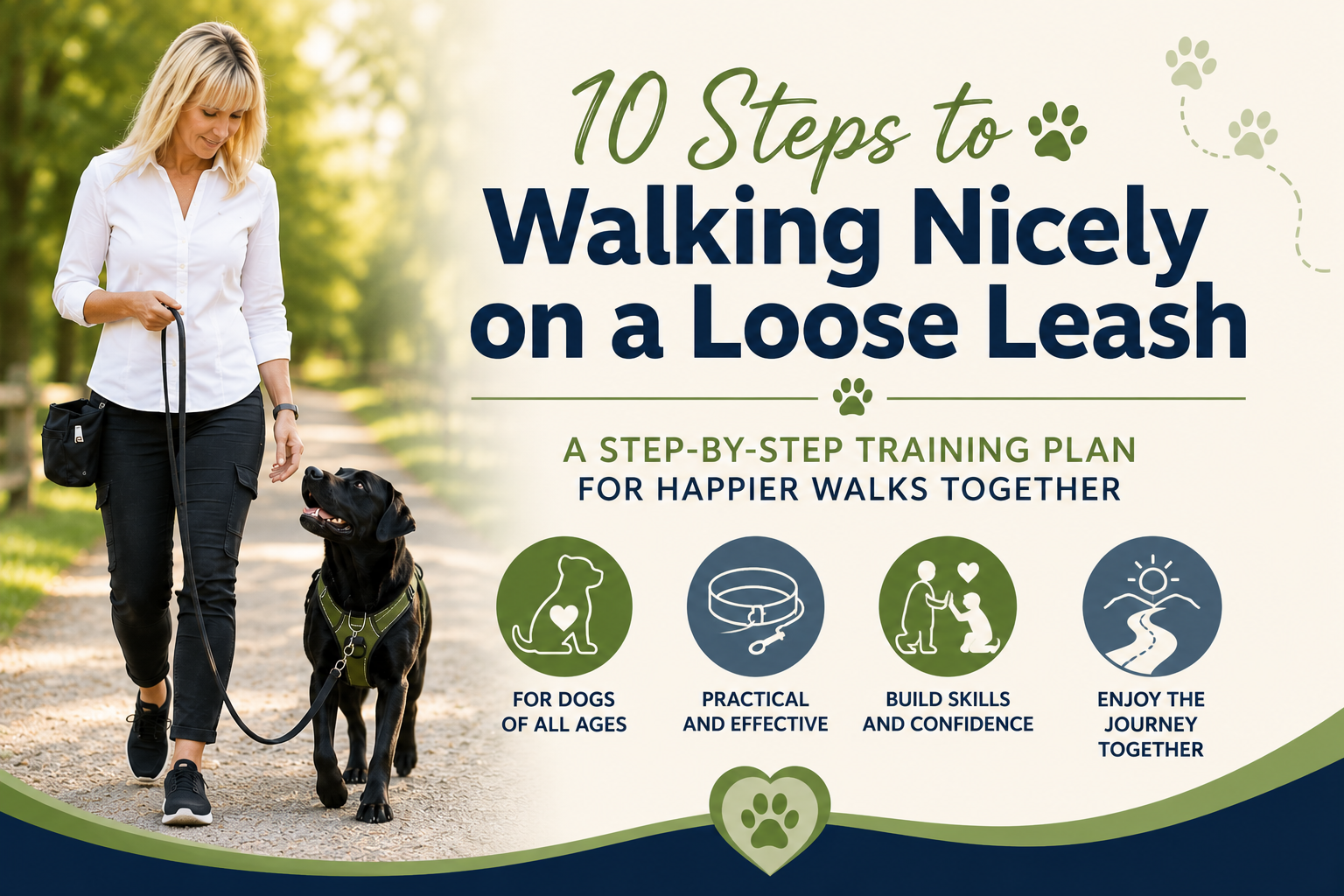
This 10-step training plan is an essential resource for dogs of all ages, from puppies just beginning their training journey to adult dogs in need of a refresher.
Walking nicely on a loose leash is an important life skill. When this skill is lacking, it can negatively impact the human-canine relationship, often resulting in fewer walks, reduced opportunities for exercise, and decreased exposure to the people, places, and experiences that contribute to a dog's overall wellbeing.
The training games and exercises included in this program are designed not only to improve leash walking skills, but also to help dogs and their guardians enjoy more relaxed and rewarding walks together. In turn, this can lead to more frequent outings, increased physical activity, greater mental enrichment, enhanced social experiences, and a stronger bond between dog and guardian.
Definition of Walking Nicely on a Loose Leash & Our Goals
Our goal is not to teach an obedience-style heel position. Rather, we want dogs and their guardians to learn to move together comfortably, with both parties contributing to the maintenance of a loose leash.
A dog walking nicely on a loose leash may walk slightly ahead, beside, or behind their guardian, provided the leash remains slack and both dog and guardian can navigate their environment safely and comfortably.
Follow the steps in this course and you will soon be helping clients achieve enjoyable, relaxed walks with dogs that are happy, attentive, and reliable on leash.
Before You Begin
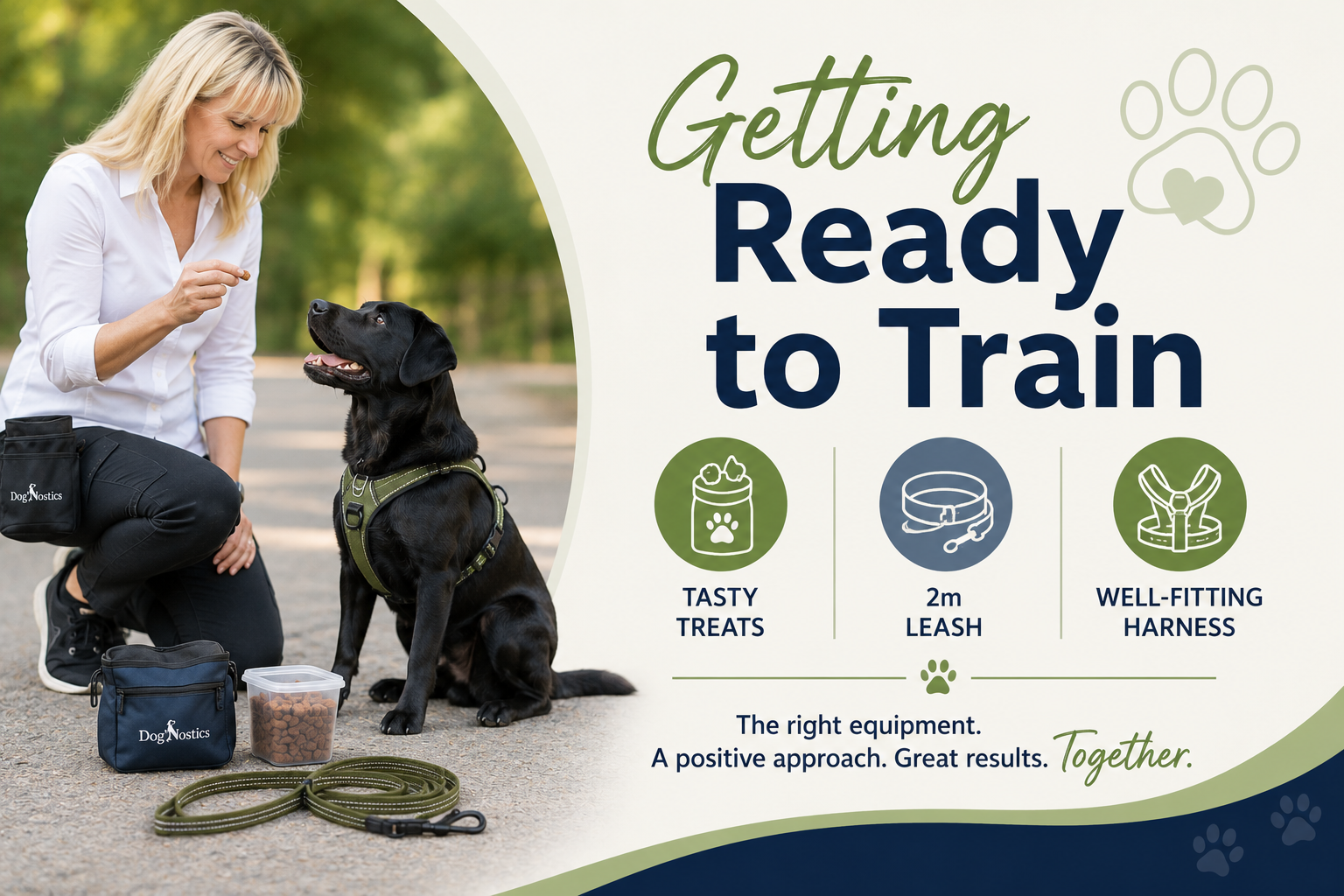
Before getting started, take a few moments to ensure that you have the recommended equipment and training resources ready. The good news is that no previous training skills are required. Whether you are working with a puppy, an adolescent dog, or an adult dog, this program will guide you through the training process step by step.
Equipment Checklist
You will need:
- Plenty of high-value treats that your dog finds motivating
- A 2-metre (6-foot) leash
- A well-fitting, non-restrictive harness
Additional information about equipment selection and use can be found in the 10 Steps to Walking Nicely on a Loose Leash E-Workbook and throughout this Professional Tool-Kit.
Training Guidelines
- No prior training skills are required.
- Progress at a pace that is appropriate for the individual dog and any people involved in the training process.
- Use the Train-Test-Train Method throughout the program.
- For the best results, complete the training exercises in the order presented, as each step builds upon the skills developed in the previous lessons.
An Important Question
Can we guarantee that a dog who completes the 10 Steps to Walking Nicely on a Loose Leash will always walk perfectly and never pull?
No.
Neither we nor you should ever guarantee that a dog will respond in a particular way 100% of the time.
While systematic training and appropriate reinforcement can dramatically improve loose leash walking skills, it is unrealistic to expect perfect performance in every environment and under all circumstances.
Dogs are living, thinking, feeling individuals. They are not machines programmed to produce the same response every time. Like humans, dogs make decisions based on what is happening around them and how they are feeling in that moment.
Behavior is always influenced by the environment. A dog who responds beautifully in one situation may struggle in another, and this does not mean the training has failed.
There are many reasons why a dog may not respond immediately or may temporarily struggle with a skill. For example:
- Something in the environment may be affecting the dog's ability to respond.
- The dog may not feel safe or comfortable in that situation.
- The dog may have noticed something that the guardian has not.
- The cue may not have been heard.
- Something in the environment may be particularly interesting or distracting.
- The skill may require further practice and reinforcement.
- The current environment may simply be too challenging for the dog's present level of learning.
What Can We Expect?
What we can reasonably expect is that dogs learn best when training is systematic, enjoyable, and reinforced appropriately.
If guardians work through the exercises in this program, follow the training progression, use meaningful reinforcement, avoid skipping steps, and increase difficulty gradually, they should see significant improvements in their dog's loose leash walking skills.
By the end of the program, most guardians and dogs will be well on their way to enjoying calmer, more successful walks together.
More Than Loose Leash Walking
The goal of this program extends beyond teaching a dog to walk on a loose leash.
The training games have been designed to be enjoyable for both dog and guardian while building valuable life skills, strengthening communication, and increasing confidence.
As skills improve, many guardians find themselves walking more often, exploring new environments, and enjoying richer shared experiences with their dogs.
Success is not perfection. Success is a dog and guardian who enjoy spending time together while continuing to learn and grow as a team.