
Gain Your Dog Training Journeyman Course Certificate
Refine Your Skills. Expand Your Knowledge. Train with Confidence.
Enroll Now - $850 or $145 x 6 monthly payments
Advance Your Knowledge. Refine Your Skills. Strengthen Your Professional Practice.
Go Beyond the Foundations of Dog Training and Develop Greater Precision, Understanding & Professional Judgment.
Professional development doesn't stop once we understand the foundations of learning and training.
As our skills develop, we need to look more closely at why behavior occurs, how environmental variables influence it, how learning histories affect responding, how our training procedures function, and how to make increasingly thoughtful decisions for the individual learner in front of us.
The DogNostics Journeyman Dog Training Course is an extensive professional education program designed to take existing dog-training knowledge and practical skills to a substantially deeper level.
Designed for professional dog trainers and pet professionals seeking continuing professional development, as well as students progressing through the DogNostics Dog Trainer Certificate Program, Journeyman combines learning and behavior science, practical training, critical thinking, welfare, professional application, and individualized instructor feedback.
Experienced trainers can use the course to deepen and update existing knowledge, refine practical training mechanics, strengthen their application of behavioral science, examine familiar concepts from a more advanced perspective, and identify opportunities for continued professional development.
The Journeyman Course can be completed as a standalone professional development program or as the second level of the DogNostics Dog Trainer Certificate (DN-DTC) Program.
While completion of the Apprentice Course is not mandatory, Journeyman assumes a solid understanding of foundational force-free training principles and practical training skills. We therefore strongly recommend completing the DogNostics Apprentice Dog Training Course first or ensuring you possess equivalent knowledge and practical competency.
Go Deeper Into the Science. Apply It to Training.
At Journeyman level, the question is increasingly not simply:
“How do I train this behavior?”
It is also:
“Why is this happening?”
“What variables may be influencing the behavior?”
“What is the learner actually responding to?”
“What effect is my training procedure having?”
“What does the data tell me to do next?”
Throughout the course, you'll deepen your understanding of areas including:
- Canine communication, distance and consent
- Self-protective responses, aggression, predation and reactivity
- Respondent and operant conditioning
- Antecedents, setting events and motivating operations
- Stimulus control, discrimination and cue histories
- Reinforcers and reinforcement processes
- Continuous and intermittent schedules of reinforcement
- Differential reinforcement
- Reinforcement delivery strategies
- Extinction and its welfare implications
- Habituation and sensitization
- Shaping, micro-shaping and errorless learning
- Constructional approaches to training
- Environmental molding and thoughtful use of prompts
- Behavior chains, compound behaviors and backward chaining
- Training fluency, generalization and maintenance
- Training plans and data-informed decision-making
- Positive reinforcement and negative punishment
- Positive punishment, negative reinforcement, escape and avoidance
- Behaviorism and the foundations of learning science
- Choice, agency, welfare and professional decision-making
You'll continually connect the terminology and principles of behavioral science with what you actually observe and do when training dogs.
More Than Recorded Lessons
Journeyman isn't a course where you simply watch presentations and collect a certificate.
The program combines multiple forms of professional learning so that important concepts are introduced, applied, revisited, assessed and progressively refined.
Throughout the five core modules, you'll encounter:
🎥 Recorded Lessons & Practical Demonstrations
Detailed presentations and training demonstrations exploring both the science and practical application of modern force-free dog training.
📘 Lesson Notes - How & Why
Comprehensive written resources consolidate essential learning while expanding on the reasoning behind training decisions.
🧠 Additional ABA Notes - The Science Behind It
Where appropriate, additional Applied Behavior Analysis material develops your understanding of behavioral processes, terminology, and the environmental variables relevant to training.
💼 Professional Practice - Working With Real Clients
Professional application sections help you consider how learning translates beyond your own training sessions into thoughtful, ethical work with dogs and their guardians.
📚 Research & Supplementary Learning
Research papers, professional resources, position statements, protocols, and further reading provide opportunities to explore subjects beyond the core curriculum.
This layered approach is designed to support genuine continuing professional development, rather than passive course completion.
Learn. Practice. Assess. Refine.
Knowledge alone doesn't create an exceptional trainer.
Professional skill requires the ability to observe carefully, plan thoughtfully, manipulate criteria precisely, deliver reinforcement effectively, recognize when something isn't working, assess the information the learner is providing, and adjust accordingly.
Throughout Journeyman, you'll continue developing practical training skills while applying increasingly sophisticated learning principles.
You'll work with skills and procedures involving intelligent luring, targeting, capturing, shaping and micro-shaping, stimulus control, discrimination training, reinforcement delivery, differential reinforcement, behavior chains, backward chaining, constructional learning, environmental arrangements, training plans, generalization, maintenance, and much more.
The emphasis increasingly moves from simply being able to produce a trained behavior toward understanding how you constructed it, why your procedure worked, what variables influenced performance, and what you would change if it didn't.
Make Training Decisions Using Observation & Data
As trainers develop, our decisions should become less dependent on guesswork and increasingly informed by what the learner's behavior tells us.
Journeyman develops your ability to plan training, establish measurable criteria, observe performance, collect useful information, and adjust your training accordingly.
You'll revisit the DogNostics Train-Test-Train Method, develop criteria systematically, and learn to make informed decisions about whether to push, stick or drop a training criterion.
You'll also explore situations such as shaping where progression must remain particularly responsive to the behavior emerging in front of you.
The aim is not simply to follow a training recipe.
It is to become increasingly skilled at designing, assessing and adapting training for the individual learner.
Learn With Personalized Instructor Feedback
Knowledge grows through study. Professional training skills develop through practice, assessment and informed feedback.
Throughout the Journeyman Course, you'll complete progressively challenging practical skill assessments designed to develop and demonstrate your training mechanics, observation, timing, planning, and decision-making.
Your submissions receive personalized instructor feedback, recognizing what you're doing well while identifying opportunities to further refine your training.
Feedback may consider areas such as criteria, timing, reinforcement delivery, antecedent arrangements, prompts, learner responses, training efficiency, and overall strategy.
The objective isn't simply to determine whether you completed an exercise.
It's to help you continue developing into a knowledgeable, analytical, thoughtful, and highly skilled force-free trainer.
Demonstrate What You Know - and What You Can Do
Your learning is assessed throughout the Journeyman program.
Each of the five core modules concludes with a knowledge quiz and practical skill assessment, giving you repeated opportunities to demonstrate both theoretical understanding and practical application.
To successfully complete the Journeyman Course, students are required to engage with the course curriculum and successfully complete the required knowledge and practical skill assessments.
Successful completion therefore represents much more than watching the course material. It demonstrates continued engagement with both the science and practical application of professional dog training.
Five Core Modules + An Extensive Supplementary Learning Module
Journeyman progresses systematically through five core learning modules, each building upon and revisiting knowledge and skills developed previously.
The curriculum then continues into Journeyman Module Six - Your Supplementary Module, where additional resources corresponding to each of the five core modules provide opportunities for further professional study.
These supplementary materials extend learning through additional research, professional resources, training protocols, and practical tools.
The purpose isn't simply to provide more content.
It is to encourage one of the most important habits of professional practice:
Continue reading. Continue questioning. Continue assessing. Continue learning.
Professional Development & the DN-DTC Pathway
The Journeyman Course is a substantial professional continuing education program in its own right.
It is also the second of three progressive levels within the DogNostics Dog Trainer Certificate Program:
Apprentice → Journeyman → Master
For established and credentialed dog trainers, Journeyman provides an opportunity to deepen existing knowledge, refine practical skills, strengthen the application of learning and behavior science, and undertake structured continuing professional development.
For students working toward the DogNostics Dog Trainer Certificate, Journeyman builds upon Apprentice and prepares them for the final Master level.
Successful completion of Journeyman earns its own Course Attendance Certificate.
Students who successfully complete all three levels and the requirements of the complete DN-DTC program are eligible to earn the DogNostics Dog Trainer Certificate (DN-DTC) and use the professional credential DN-DTC after their name.
Continuing Education Units (CEUs)
Professional Continuing Education for Dog Trainers & Behavior Professionals
The DogNostics Journeyman Dog Training Course is designed as professional continuing education for dog trainers and pet care professionals seeking to advance their knowledge and practical skills.
The course is currently approved for:
- IAABC: 25 CEUs
- CCPDT: 21 CEUs
- PPAB: 25 CEUs
Journeyman provides structured professional education across learning and behavior science, practical training mechanics, canine communication and behavior, reinforcement processes, stimulus control, training planning, behavior change, welfare, critical thinking and professional application.
Participants don't simply access educational content. Learning is reinforced through module knowledge assessments, practical skill assessments, applied exercises, supplementary professional study, and personalized instructor feedback.
Explore the Complete Journeyman Curriculum
Journeyman is extensive.
Across the program, you'll move from canine communication, consent and functional interpretation of behavior, through stimulus control, fluency, reinforcement and training mechanics, into behavior change, constructional learning, training plans, behavior chains, respondent and operant conditioning, and increasingly sophisticated professional decision-making.
Take a look through the curriculum and discover how far Journeyman can take your professional knowledge and training skills.
Course Curriculum
-
PreviewLesson 1 - Introduction (2:46)
-
StartLesson 2 - Canine Communication: Reading the Whole Dog in Context. (33:40)
-
StartLesson 3 - Consent Tests: Asking, Observing & Listening (18:58)
-
StartLesson 4 - Reading the Answer: Consent Tests in Practice (4:26)
-
StartLesson 5 - Creating or Closing Distance: Understanding the Function of Social Behavior (6:23)
-
StartLesson 6 - Distance-Increasing Behavior: Listen Before the Dog Needs to Shout (15:18)
-
StartLesson 7 - The 4 Fs: Understanding Self-Protective Responses (11:01)
-
StartLesson 8 - Understanding Aggression: Affective Behavior, Predation & Reactivity (25:22)
-
StartLesson 9 - Distance-Decreasing Behavior: Seeking, Maintaining & Reinitiating Interaction (11:10)
-
StartLesson 10 - Emotional Contagion: How Emotions Influence Social Interactions (5:47)
-
StartLesson 11 - Choosing What to Teach: Is It Right for This Learner? (6:17)
-
StartLesson 12 - Teaching an Olfactory Cue: Harnessing the Power of the Canine Nose (18:17)
-
StartLesson 13 - The Differential Outcomes Effect: Can Different Reinforcers Help Dogs Learn? (13:28)
-
StartLesson 14 - Intelligent Luring: From Guided Learning to Independent Responding (16:39)
-
StartLesson 15 - Teaching “Take a Bow”: From Natural Play Signal to Trained Behavior (11:03)
-
StartLesson 16 - Refining Targeting Skills: From Touch to Purposeful Training (17:57)
-
StartLesson 17 - Teaching “Go Round”: Building a Flexible, Functional Behavior (7:23)
-
StartLesson 18 - Refining Your Shaping Skills: Slice, Observe & Adjust (7:53)
-
StartLesson 19 - The Four Processes of Operant Learning: Understanding What Changes Behavior (20:34)
-
StartLesson 20 - Teaching a Figure Eight: Building Movement, Positioning & Training Skills (7:42)
-
StartLesson 21 - Capturing Behavior: Turning Everyday Actions into Cues (17:43)
-
StartLesson 22 - No Reward Markers: Information, Learning and Function (14:30)
-
StartLesson 23 - Extinction: Science, Strategy & Welfare (10:56)
-
StartLesson 24 - Respondent Conditioning: Changing Emotional Responses Through Association (13:38)
-
StartLesson 25 - Operant Learning in Action: Analyze the Behavior, Identify the Process (30:42)
-
StartLesson 26 - Bringing It All Together (3:04)
-
StartYour Documentation
-
StartJourneyman Module 1 Quiz & Skill Assessment
-
PreviewLesson 1 - Introduction (2:59)
-
StartLesson 2 - Beyond the Trained Behavior: Building Flexibility & Adaptability (9:21)
-
StartLesson 3 - Developing Fluency: When Learning Begins to Flow (10:46)
-
StartLesson 4 - The 3 Ds: Building What the Behavior Actually Needs (20:32)
-
StartLesson 5 - PaLS: Developing Precision, Latency & Speed (8:07)
-
StartLesson 6 - Proofing Behaviors: Preparing Skills for Real Life (14:17)
-
StartLesson 7 - Building Stimulus Control Through Discrimination Training (4:40)
-
StartLesson 8 - Cue History Matters: Learned Irrelevance, Poisoned Cues & New Cues (19:21)
-
StartLesson 9 - What Sets the Stage for Behavior? Antecedents, Setting Events & Motivating Operations (7:04)
-
StartLesson 10 - From Sit or Stand to “On Your Side”: Progressing an Established Behavior (9:44)
-
StartLesson 11 - Teaching “Roll Over”: A Fun Trick, but Should We Teach It? (7:54)
-
StartLesson 12 - Teaching Directional Cues: Go Left & Go Right (8:45)
-
StartLesson 13 - Teaching “Say Cheese”: Camera Focus & Positive Associations (10:01)
-
StartLesson 14 - The Premack Principle: Using Behavior as Reinforcement (13:19)
-
StartLesson 15 - Bringing It All Together (2:09)
-
StartYour Documentation
-
StartJourneyman Module 2 Quiz & Skill Assessment
Frequently Asked Questions
Your Instructor
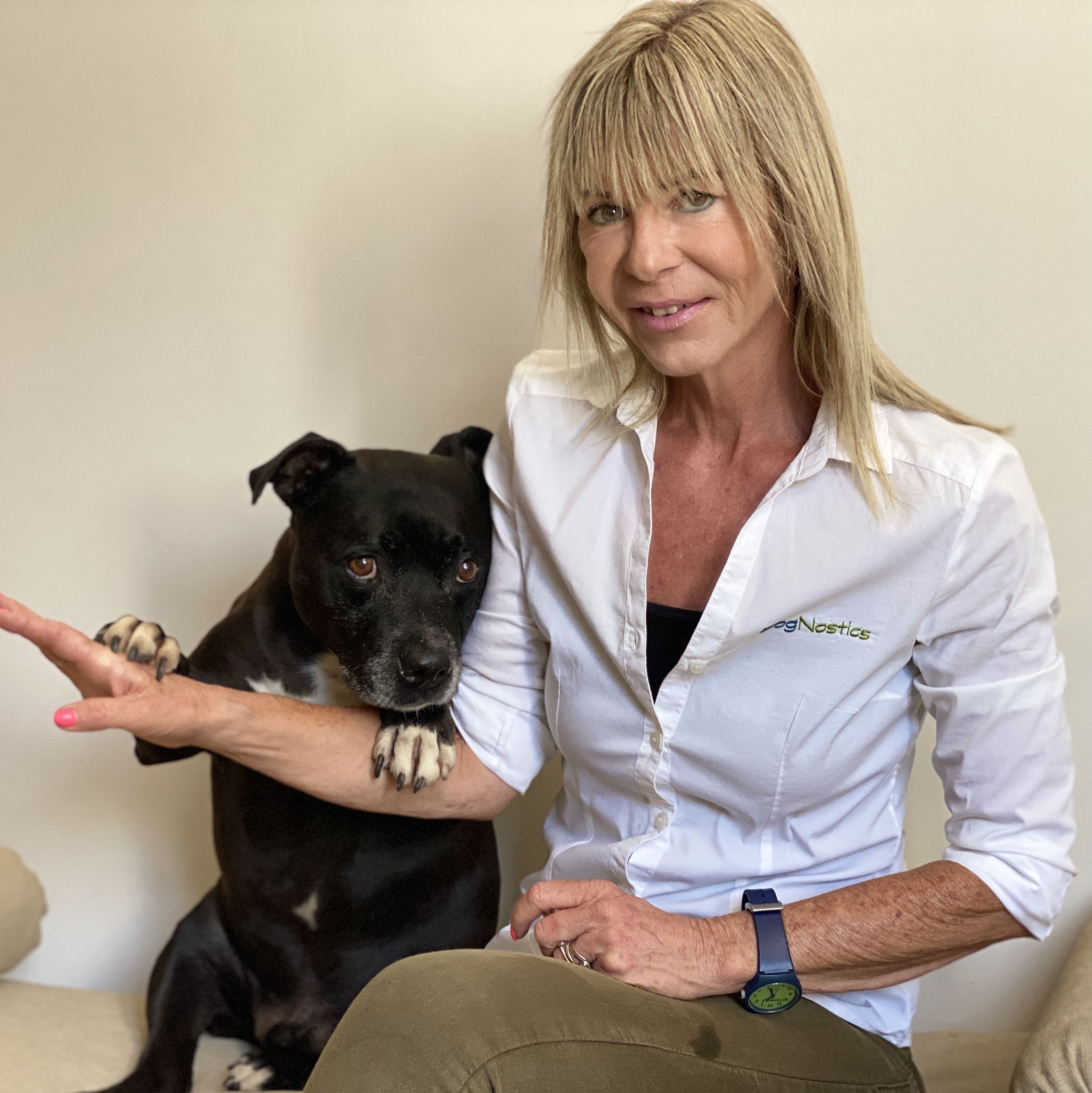
Louise Stapleton-Frappell - B.A. Hons. PCBC-A. PCT-A. CAP3. CTDI. CWRI. DN-FSG2. DN-CPCT2. FFCP.
Louise Stapleton-Frappell is a highly respected professional canine trainer and behavior consultant, and a valued Partner and Faculty Member of DogNostics Career Center. She also serves as a Board Member of The Pet Professional Guild.
A graduate of the University of Leeds, Louise holds a joint honors degree in Spanish and Portuguese with subsidiary studies in Management Economics and Industrial Management. She was among the first to achieve dual accreditation as both a Professional Canine Trainer and Professional Canine Behavior Consultant through the Pet Professional Accreditation Board.
Louise is the creator and lead instructor of the internationally respected DogNostics Dog Trainer Certificate Program, a comprehensive curriculum that prepares aspiring professionals to train ethically, effectively, and with confidence. She also authors and instructs a range of other DogNostics programs and has co-authored several respected industry texts and educational resources, contributing significantly to the continuing education of pet professionals worldwide.
Through her business, The DogSmith of Estepona, Louise offers personalized training services to an international clientele in Southern Spain. Known for her clarity, compassion, and commitment to positive training, she is frequently invited to speak at international conferences and educational summits.
Louise continues to raise industry standards through her mentorship, educational leadership, and unwavering dedication to force-free, ethical training.